West Virginia Financial Literacy Standards and Policy Ranking

The West Virginia Financial Educators Council (WVFEC) is the state advocacy chapter of the National Financial Educators Council (NFEC). Our role is to advance policy, standards alignment, and statewide action to ensure that West Virginia students graduate prepared to manage real-world financial decisions.

The NFEC conducts national research and develops academic standards. WVFEC translates that research into policy advocacy specific to West Virginia. Our shared mission is to ensure that all learners graduate prepared to navigate real-world financial decisions by elevating financial education to the same level of quality, accountability, and instructional integrity as other required core academic subjects.
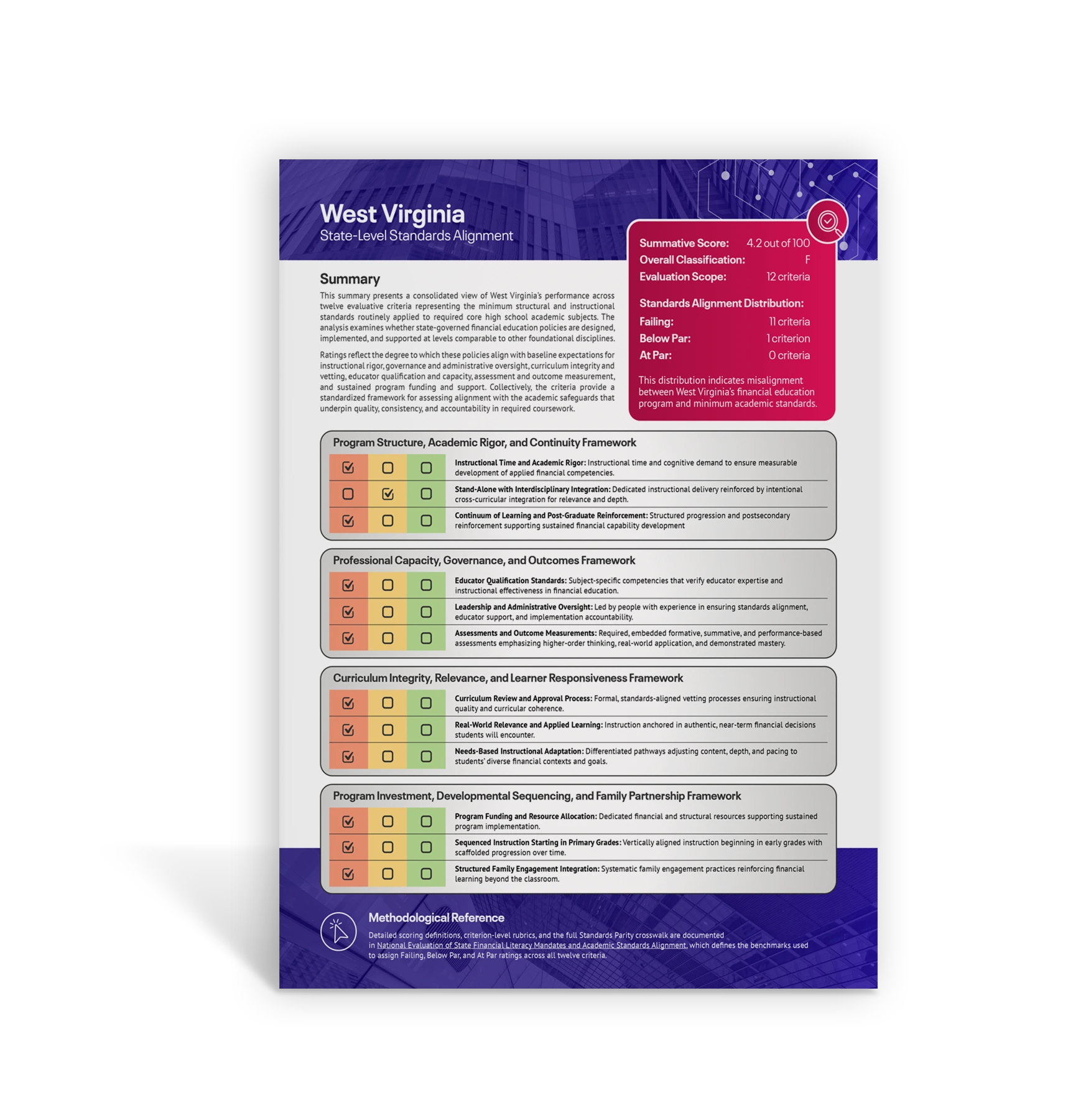
West Virginia Financial Education Standards Alignment: A State-Level Policy Assessment

West Virginia’s current approach to financial education falls far short of the academic expectations typically applied to core high school subjects like English/language arts, science, or mathematics. In its nationwide review, the National Financial Educators Council applied a uniform set of 12 evaluation criteria to every state, examining whether each one’s financial literacy policies demonstrate adequate instructional rigor, clear governance, coherent curriculum design, teacher training, assessment quality, and long‑term program support. Under this framework, West Virginia’s standards did not align with the baseline elements expected of a fully developed academic discipline.

The state’s results reveal deep structural gaps. West Virginia earned an overall alignment score of 4.2 out of 100, placing it firmly in the “Failing” category and signaling widespread deficiencies across the evaluated areas. Of the 12 criteria reviewed, 11 received Failing ratings, and the remaining criterion was marked Below Par – with none meeting the At Par threshold. This pattern underscores a lack of rigor, coherence, and breadth in the state’s current financial literacy standards, ultimately limiting their capacity to support meaningful learning outcomes for students statewide.

West Virginia Financial Education Assessment

WVFEC’s Advocacy Focus in West Virginia

WVFEC works to ensure that financial education is treated as a core academic subject rather than optional enrichment. Our advocacy is organized to advance priorities that align West Virginia’s policy environment with established academic expectations.
Research & Policy Guidance

WVFEC promotes financial education policies aligned with core academic standards, emphasizing clear outcomes, educator preparedness, and accountability. Grounded in national research, WVFEC works with educators, community leaders, and policymakers to identify gaps, evaluate legislation, and support scalable, standards-aligned implementation.

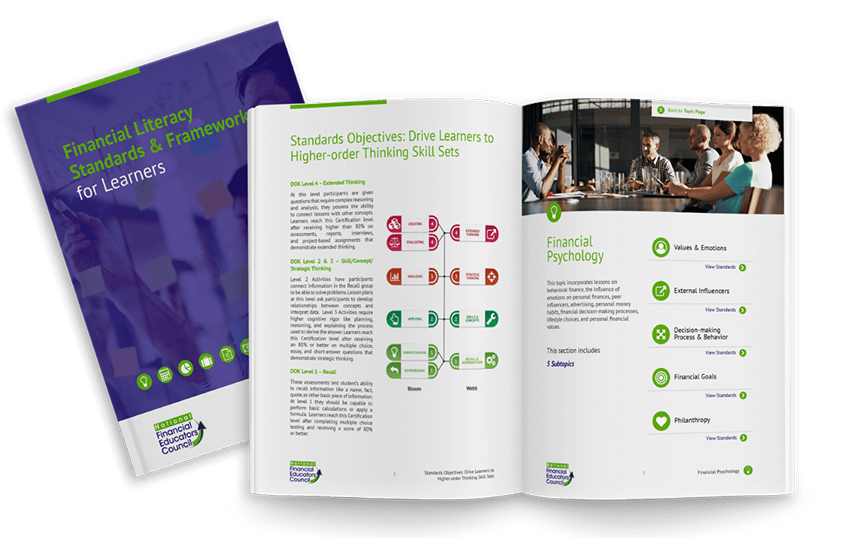
Standards for Financial Educators and Learners

WVFEC supports the adoption of comprehensive learner outcome standards and educator competency frameworks to strengthen instructional quality statewide. By providing clear benchmarks for what students should know and be able to do – and what educators must demonstrate to teach effectively – WVFEC helps establish consistent expectations that support long-term financial capability development.

Closing Statement

West Virginia’s students deserve more than exposure to financial concepts; they deserve real preparation for the financial decisions that shape adulthood. These findings reveal a clear opportunity to strengthen financial education by aligning it with the rigor and accountability applied to other core subjects.

By advancing standards-based reform and investing in quality implementation, West Virginia can ensure that every student graduates financially prepared for life beyond high school. Meaningful progress requires collective action from educators, families, policymakers, and community leaders – working together to make financial education a foundational part of a future-ready education system.

National Financial Educators Council

West Virginia Board of Education – Social Studies/Civics Standards

West Virginia Code – § 18-2-7c (Personal Finance)

NFEC’s National and State Advisory Board

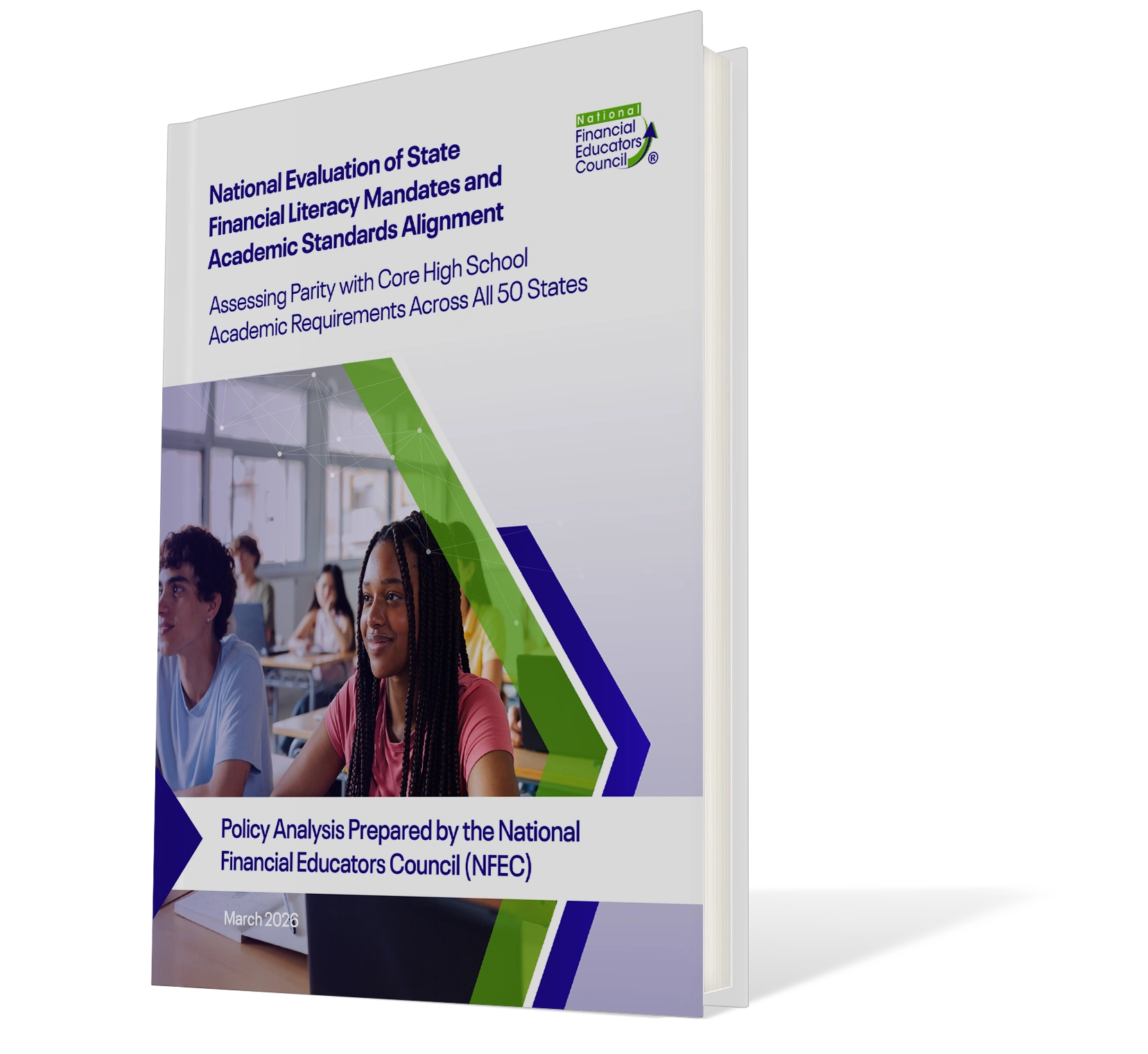
National Evaluation of State Financial Literacy Mandates and Academic Standards Alignment

State-Mandated Financial Literacy Standards: A Comprehensive National Review

Financial Literacy Instructor Requirements

Certified Educator in Personal Finance

Teaching Financial Literacy to College Students

Financial Literacy Standards in West Virginia

West Virginia recently strengthened its financial literacy policy. Under West Virginia Code § 18-2-7c, every high school student must complete a one-half credit course of study in personal finance prior to graduation. Beginning with the class of students entering ninth grade in the 2024-2025 school year and thereafter, students must complete this personal finance requirement in 11th or 12th grade as a condition for earning a high school diploma. Source.

The State Board of Education is tasked with developing guidance for program implementation, including curriculum content, standards, eligible teacher certifications, and how the course counts toward graduation requirements; however, to date, these efforts have not resulted in meaningful improvements that support positive student achievement or long-term outcomes. Source.

Other Agency Ratings of West Virginia Financial Literacy Standards

In a National Report Card compiled biannually, Champlain College grades West Virginia with a “B” in terms of the state’s standards for financial education in schools. The Mountain State says students must pass a full-year course titled Civics for the Next Generation as a high school graduation requirement. This course includes five out of 43 benchmarks that are related to personal finances, for an estimated total of 14 hours of exposure to financial literacy instruction per student.

Recently the state education criteria received a boost when the West Virginia Treasurer’s Office launched NetWorth, a program designed to promote financial education in all West Virginia public schools beginning at the kindergarten level. NetWorth has won several national honors, including awards from the Council of State Governments and the Institute for Financial Literacy.

Financial instruction is covered under the West Virginia’s K-12 standards, as summarized by the Council for Economic Education (CEE), and those standards must be implemented by all districts. A high school personal finance course is required to be offered, but not to be taken.